The College of Engineering site can serve as a test environment for many academic sites across TTU.edu. The issues observed here are common across the entire site.
Jump to Recommendations
College of Engineering

Scholarships have high engagement times. This is also reflected in our student journey research. It indicates that they are reading every word about this subject.

Campaign traffic: engagement times are low. Key events would tell us more.
College of Engineering
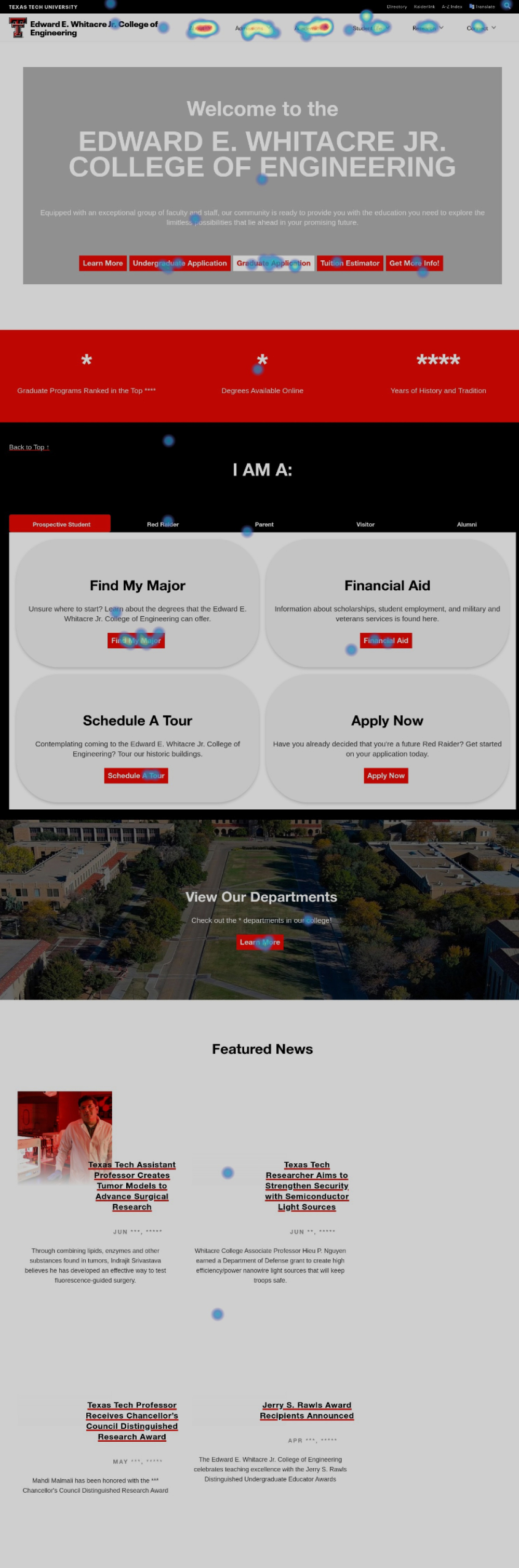
Consider the student journey when evaluating these clicks. Cost, majors, fit. The clicks indicate that those are the things they're most interested in.
Admissions and academics rank high, which is the type of engagement you want to see on a page like this.
College of Engineering
"Find My Major" link takes the user to a page that doesn't immediately reflect that content. In the side-by-side view below, the template appears almost identical at the top of the page, and feels like an error. To see "Find My Major" content, the user has to scroll past lots of introductory content very far down the page.
This is especially concerning for mobile users.
Once people find the degree finder, they are engaging with it, which is good.

College of Engineering
These pages have layers of secondary navigation that is overwhelming, especially for prospective students.

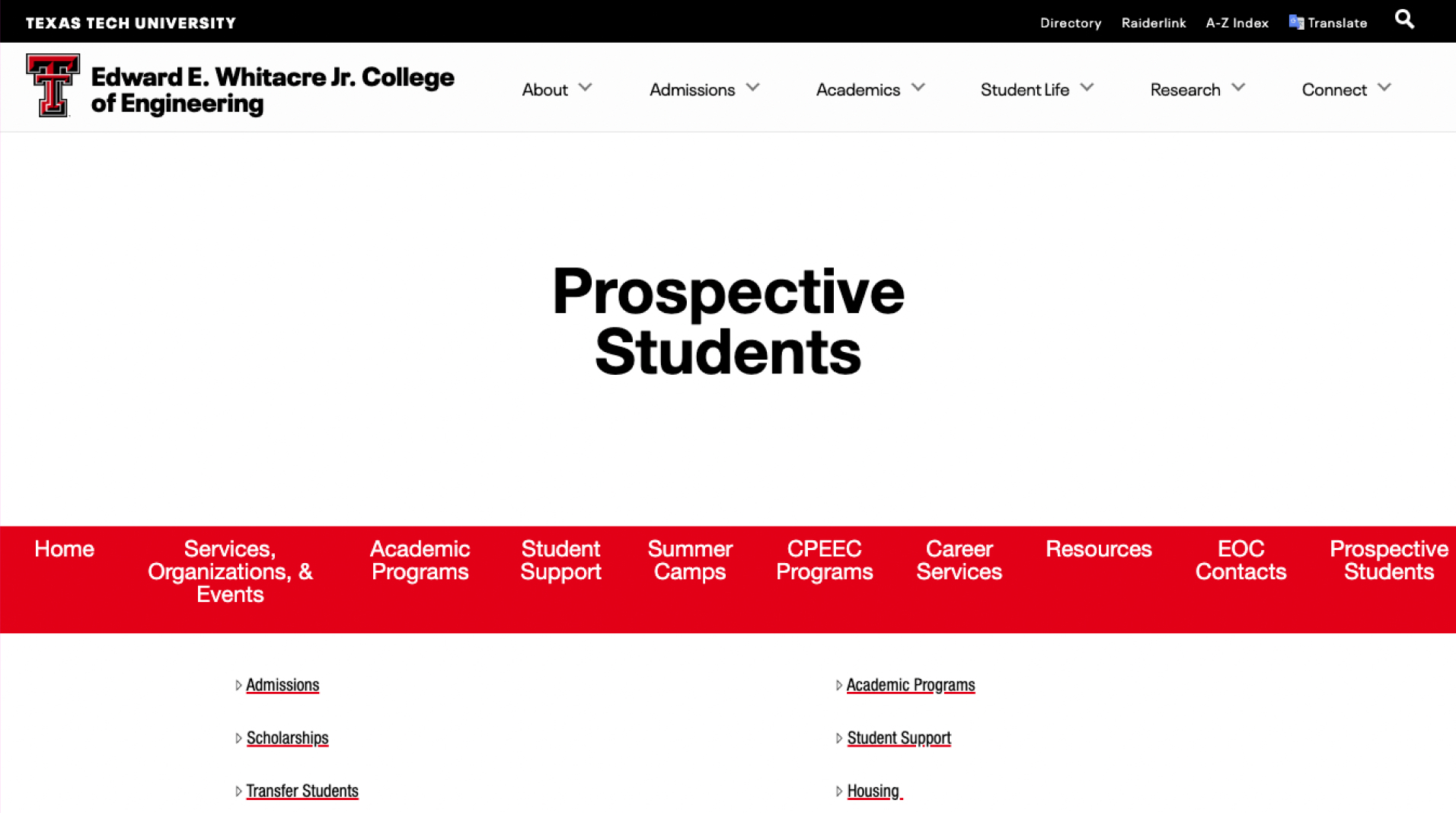
A lot of this content is duplicative of content in the Admissions site, risks becoming outdated or inaccurate, and can confuse the user about where they are on the site.
College of engineering
Almost 50% of TTU's traffic is mobile. This recording shows what the engineering site experience is on mobile. This recording was made by The Devoted, not a user test session. Notice how the template behaves on hover events, the length of the pages, scaling of design elements and spacing, and how interactions with cards are not accessible.
This video shows an actual user trying to find program information. They begin with the main site search and then navigate through academic pages. Notice how the user circles back through content and uses multiple tabs while searching for their topics of interest.
College of Engineering Site
Option to intro the rec content...
With only using an automated accessibility checker, the current CoE pages could pass minimum accessibility standards, but examining the pages more closely (in particular on mobile) reveals severe usability and accessibility issues. Hidden content behind flip cards, inability to click on mobile, and sticky navs prevent some users from being able to fully read important content related to academic programs.
Globally, the TTU.edu website will send users to the catalog for course related information on the main academic page. The CoE has their own dedicated program pages for their content that also directs users to the catalog page. In addition, there are calls-to-action like apply, request information and contact that make it unclear who exactly the student is contacting: the College of Engineering or TTU Admissions.
There are several instances on the CoE where an entire page of information is duplicated, in particular information related to prospective students. While direct links may be provided to more specific content, single pages are created with more links to the same content. In addition, the usage of the navigation drop-down, in-page links, and secondary navigation creates search overload with your users.
The College of Engineering (and various other colleges) have several design systems embedded within its own architecture. The high-level pages (CoE) are based on templates that are a different version than the departmental pages (The Department of Computer Science, etc).Since the subset of available templates and content types are so large, it is difficult for web editors to adhere to a standard when building pages for their respective departments.